
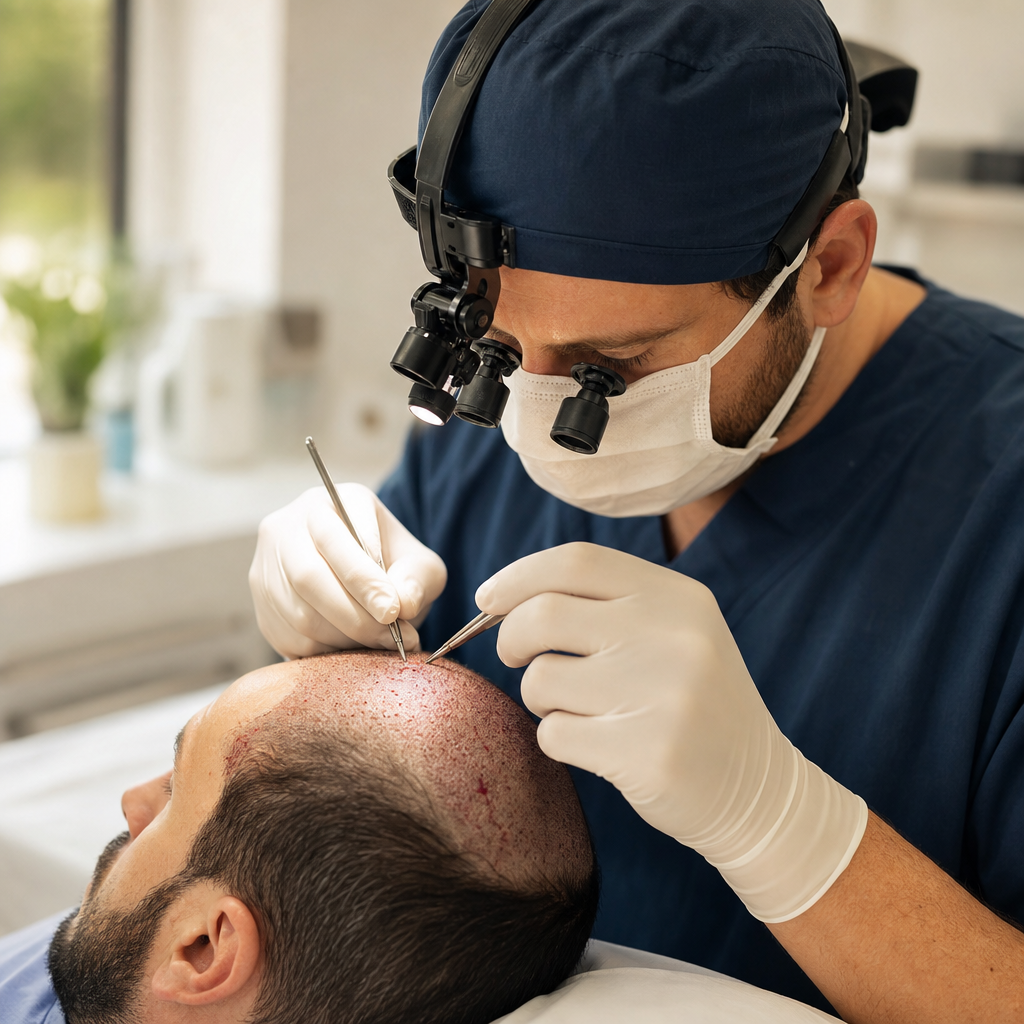
What Makes HST Technology Fundamentally Different from FUE?
For residents near Khajaguda, Kokapet, and the Oakridge International School corridor exploring hair restoration, understanding the clinical gap between HST and FUE is essential before committing to any procedure.
FUE (Follicular Unit Extraction) extracts entire follicular units using a punch tool, permanently removing grafts from the donor area. The process is irreversible. Once donor density is depleted, it cannot be restored.
HST (Hair Stemcell Transplant), exclusively available at Hair Science Clinic in Khajaguda, operates on a fundamentally different biological principle:
- Partial extraction only: HST removes just a portion of each follicular unit, leaving the stem cell base intact in the donor zone
- Donor regeneration: Because stem cells remain, the donor area actively regenerates — meaning the same zone can be used again in future sessions
- Higher yield potential: Regenerative capacity translates to more grafts over a lifetime without permanent donor depletion
- Minimally invasive profile: No scalpels, no linear scarring, and significantly reduced recovery disruption
This is not an incremental improvement over FUE. HST represents a structurally different approach to hair restoration — one built around preserving biological capital, not depleting it.
Clinical Evidence: Why 95% Graft Survival Matters for Your Results
When Khajaguda residents research hair transplant options, graft survival rate is the single most critical number to understand. It directly determines how dense, natural, and permanent your final results will be.
Traditional FUE procedures typically report graft survival rates between 70% and 85%. HST (Hair Stemcell Transplantation), practiced exclusively in India at Hair Science Clinic near Oakridge International School, Khajaguda, consistently achieves graft survival rates of up to 95%. That gap is not marginal — it is the difference between sparse coverage and genuinely natural-looking density.
What Drives HST's Superior Survival Rate?
- Minimal transection: HST extracts follicles with precision tools that preserve the surrounding stem cell tissue, dramatically reducing damage during harvesting.
- Reduced time outside the body: Grafts are handled with controlled protocols that minimise exposure and cellular stress.
- Donor preservation: Unlike FUE, HST allows the donor zone to partially regenerate, protecting long-term follicle availability.
For patients commuting from Kokapet, Nanakramguda, or nearby Financial District, this clinical advantage means fewer sessions, better coverage, and results backed by measurable science — not marketing claims.
Schedule a consultation at Hair Science Clinic, Khajaguda to review your candidacy based on actual clinical metrics.
The Procedural Advantage: Minimizing Trauma, Maximizing Growth
For residents near Kokapet, Narsingi, and Khajaguda considering hair restoration, understanding procedural differences between HST and FUE is critical to making an informed decision.
Why Graft Survival Rates Define Results
Traditional FUE extracts follicular units using sharp punches that sever surrounding tissue, exposing grafts to mechanical stress. This friction-based extraction measurably reduces graft viability before transplantation even begins.
HST (Hair Stem Cell Transplant), exclusively available at Hair Science Clinic near Oakridge International School in Khajaguda, uses a fundamentally different extraction protocol:
- Blunt dissection technique preserves the perifollicular sheath, protecting stem cells critical to regrowth
- Follicle splitting technology allows one donor follicle to generate multiple grafts — expanding yield without over-harvesting
- Reduced transection rates mean significantly fewer damaged follicles compared to standard FUE
- Shorter out-of-body time keeps grafts metabolically stable, directly improving post-procedure hair density
Less Scalp Trauma, Faster Recovery
Because HST's blunt extraction causes minimal epidermal disruption, patients from Financial District and Kokapet consistently report faster healing, negligible scarring, and denser long-term results — outcomes standard FUE simply cannot guarantee at this level.
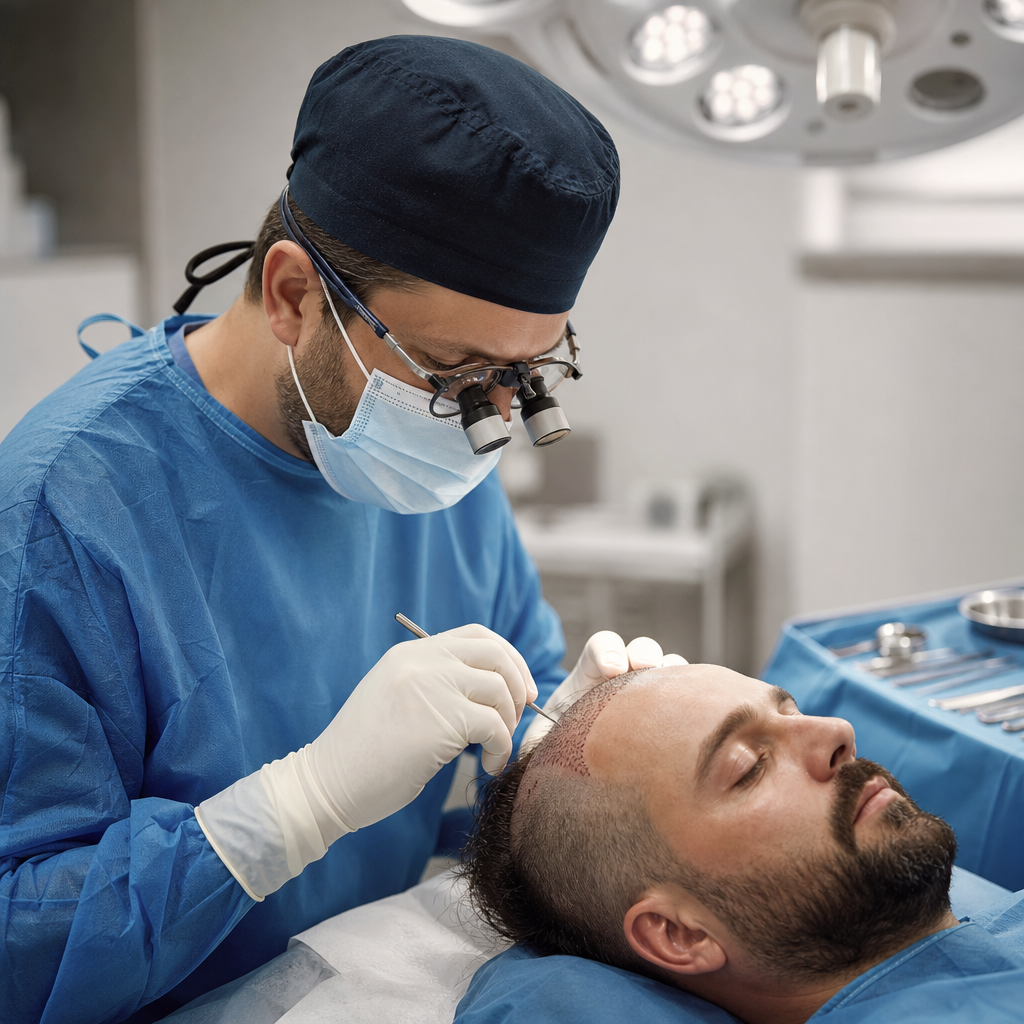
Post-Operative Timeline: When Will You See New Hair Growth?
For patients visiting Hair Science Clinic near Oakridge International School in Khajaguda, understanding the recovery timeline sets realistic expectations and reduces post-procedure anxiety. Whether you've undergone HST or FUE, the growth phases follow a predictable biological pattern — though HST's follicle-preservation advantage can influence density outcomes over time.
Month-by-Month Growth Breakdown
- Weeks 1–3: Initial shedding of transplanted hair is normal. The follicle anchors beneath the scalp surface.
- Month 2–3: Dormant phase. No visible growth yet — this is expected, not a complication.
- Month 4–6: New hair shafts emerge. Texture may initially appear fine or slightly wiry.
- Month 8–10: Significant density becomes visible. Most Kokapet and Khajaguda patients report noticeable improvement at this stage.
- Month 12–18: Full results mature. HST's higher graft survival rate delivers measurably denser, more natural coverage compared to conventional FUE.
Patience is non-negotiable in hair restoration. HST's intact follicular structure means grafts establish stronger roots, directly impacting how robustly hair grows during months six through eighteen. Your post-operative follow-up at Hair Science Clinic will monitor each phase precisely.
Common Myths About Hair Transplants—Debunked by Science
Patients visiting Hair Science Clinic from Kokapet, Khajaguda, and nearby communities often arrive carrying misconceptions shaped by outdated information. Let's set the record straight.
Myth 1: Hair Transplants Always Look Unnatural
Modern HST technology preserves the natural angle, direction, and density of each graft. Results are indistinguishable from native hair growth—no plug-like appearance.
Myth 2: The Procedure Is Extremely Painful
HST is a minimally invasive, virtually painless procedure performed under local anaesthesia. Most patients resume normal activity within days.
Myth 3: Transplanted Hair Falls Out Permanently
Initial shedding is a normal biological phase. Transplanted follicles are permanent. Stable, long-term growth follows once the follicle anchors into the scalp.
Myth 4: FUE and HST Are Identical
They are not. HST uses patented Hypo-Hypothermosol storage solution, significantly improving graft survival rates compared to standard FUE protocols—a clinically documented advantage.
- Science, not trends, drives every HST outcome at Hair Science Clinic
- Located near Oakridge International School, Khajaguda—schedule a consultation to get evidence-based answers specific to your hair loss pattern
Why Proximity to Hair Science Clinic in Khajaguda Changes Your Recovery Experience
For patients in Kokapet, Khajaguda, Narsingi, and Gachibowli, choosing Hair Science Clinic isn't just about accessing India's only HST technology — it's about eliminating the recovery burden that long-distance patients face after every procedure.
Hair transplant recovery demands consistent, timely follow-up. When your clinic is minutes away — near Oakridge International School and accessible from Financial District — post-procedure check-ins become practical, not stressful.
What Local Access Means for HST Patients
- Faster follow-up appointments: No overnight travel required. Kokapet and Khajaguda residents reach us within 10 minutes.
- Immediate clinical support: Early post-HST concerns are addressed same-day, not over a call from another city.
- Reduced physical strain: Short commutes protect newly transplanted grafts during the critical 72-hour window.
- Consistent monitoring: HST's graft survival advantage is reinforced when surgeons can personally review healing progress.
Patients traveling from outside Hyderabad must independently arrange stays and return visits. Local patients simply drive across Khajaguda — and that logistical advantage directly supports better clinical outcomes. Your first step is scheduling a consultation to assess candidacy and build your personalised treatment plan.
Contact Hair Science Clinic For Expert Help
Ready to explore whether HST or FUE is right for you? Schedule your consultation at Hair Science Clinic today — India's first and only HST-certified clinic, serving patients across Khajaguda, Kokapet, Gachibowli, and all of Hyderabad.
- Address: 2nd Floor, Deva's Manor, near Oakridge International School, Khajaguda, Hyderabad, Telangana 500032
- Phone: 091773 18777
- Email: contact@ourclinic.com
- Hours: Monday to Saturday — 10:00 AM to 8:00 PM
Your consultation is the first step. Speak directly with our hair restoration specialists and discover why Khajaguda patients trust Hair Science Clinic for science-backed results.


